Where the "frozen face" fear comes fromمن أين جاء الخوف من "الوجه المتجمد"
Most of what people picture when they hear "Botox" comes from a small number of highly visible, overdone cases — not from the average, well-planned treatment. Botulinum toxin has been used safely in medicine since the 1980s, originally for muscle spasm disorders, long before it became a cosmetic mainstay. The visible extremes are the exception, not the rule. أغلب اللي بيتخيله الناس لما يسمعوا "بوتوكس" جاي من عدد صغير من الحالات المبالغ فيها اللي بتبقى واضحة جدًا — مش من العلاج المتوسط المدروس كويس. البوتوكس بيتستخدم بأمان في الطب من الثمانينات، أصلًا لعلاج اضطرابات تشنج العضلات، من قبل ما يبقى علاج تجميلي أساسي. الحالات المبالغ فيها استثناء، مش القاعدة.
What botulinum toxin actually doesإيه اللي البوتوكس بيعمله فعليًا
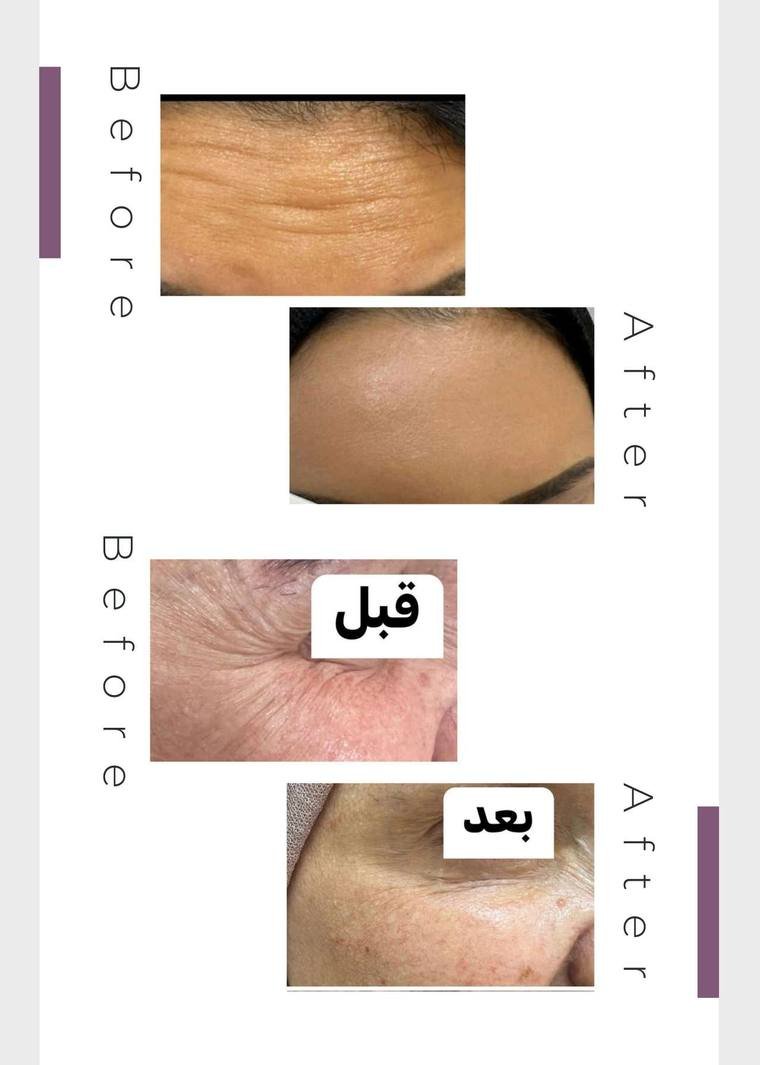
It temporarily relaxes the specific muscles responsible for dynamic wrinkles — the lines that appear when you frown, raise your eyebrows or squint. It does not paralyze the whole face, and it does not touch muscles you didn't ask to treat. A frozen appearance is almost always a sign of a dose or placement issue, not a property of the medication itself. هو بيرخي مؤقتًا عضلات محددة مسؤولة عن التجاعيد الديناميكية — الخطوط اللي بتظهر لما تعبسي أو ترفعي حواجبك أو تضيّقي عينيكِ. هو مش بيشل كل عضلات الوجه، ومش بيلمس عضلات محدش طلب علاجها. مظهر "التجمد" غالبًا دايمًا علامة على مشكلة في الجرعة أو مكان الحقن، مش خاصية في الدواء نفسه.
The dose-and-placement principleمبدأ الجرعة والمكان
A conservative, medically-led approach uses smaller, precisely mapped doses distributed across the muscle rather than one large dose in the center. This preserves natural micro-movement, so you can still look surprised, concerned or happy — you simply lose the deep, etched line that used to stay after the expression relaxed. This is often called "baby Botox" informally, but it is really just correct dosing. النهج المحافظ بقيادة طبية بيستخدم جرعات أصغر موزعة بدقة على العضلة بدل جرعة واحدة كبيرة في المنتصف. ده بيحافظ على الحركة الدقيقة الطبيعية، فتقدري لسه تبيني متفاجئة أو قلقانة أو مبسوطة — بس بتفقدي الخط العميق المحفور اللي كان بيفضل بعد ما تعبيرك يرتاح. ده بيتسمى أحيانًا "بوتوكس خفيف"، لكنه في الحقيقة مجرد جرعة صحيحة.
What a natural result actually looks likeشكل النتيجة الطبيعية فعليًا
People around you should notice you look rested, not that you "did something." The forehead moves, the eyebrows still express emotion, and the skin simply looks smoother at rest. This is the standard we plan for — treatment that supports your face rather than overriding it. الناس حواليكِ المفروض يلاحظوا إنكِ بتبيني مرتاحة، مش إنكِ "عملتي حاجة". الجبهة بتتحرك، والحواجب لسه بتعبّر عن المشاعر، والبشرة بس بتبان أنعم في حالة الثبات. ده المعيار اللي بنخطط عليه — علاج بيدعم وشكِ مش بيسيطر عليه.
Questions worth asking before treatmentأسئلة تستاهل تسأليها قبل العلاج
Ask how many units are typically used for your specific area, whether the plan is adjustable at a follow-up, and whether your provider is a licensed medical professional trained specifically in facial anatomy. These questions matter more than the brand of product used. اسألي عن عدد الوحدات المستخدمة عادة للمنطقة بتاعتك، وهل الخطة قابلة للتعديل في متابعة لاحقة، وهل مقدمة الخدمة أخصائية طبية مرخصة ومدربة تحديدًا على تشريح الوجه. الأسئلة دي أهم من نوع أو ماركة المنتج المستخدم.
Have a question about this?عندكِ سؤال عن الموضوع ده؟
Message Dr. Eman directly on WhatsApp.راسلي الدكتورة إيمان مباشرة عبر واتساب.
Ask on WhatsAppاسألي عبر واتساب